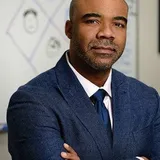
Nathan Connolly
Johns Hopkins UniversityNathan Connolly writes about racism, capitalism, politics, cities, and migration in the late-nineteenth and twentieth centuries. He pays special attention to people’s notions of family, property, and citizenship in the United States and the wider Americas. He is a co-host on the weekly podcast BackStory and Director of the Racism, Immigration, and Citizenship Program at Johns Hopkins University.
Connolly’s first book, A World More Concrete: Real Estate and the Remaking of Jim Crow South Florida, received numerous awards including the 2014 Kenneth T. Jackson Book Award from the Urban History Association and the 2015 Liberty Legacy Foundation Book Award from the Organization of American Historians. The book resuscitates older discussions of racism’s profitability by treating Jim Crow segregation in Greater Miami as a variation on the colonial and postcolonial practices afflicting tropical populations around the world. A World More Concrete also highlights never-before-seen conflicts between tenants, urban landlords, homeowners, politicians, and property managers over how best to profit from Native Americans, Caribbean migrants, working-class whites, and the black poor.
His current projects include Four Daughters: An America Story [sic]. This collective biography covers four generations of a single family, following the lives of four women of color whose forbearers migrated from the Caribbean to the United States by way of Britain between the early 1900s and 1990s. A genuinely Atlantic history, Four Daughters explores how Caribbean immigrants of color and their children defined success in America through years of British colonization, second-wave feminism, the civil rights movement, “right to work” politics, and the War on Drugs. The other book project, Black Capitalism: The “Negro Problem” and the American Economy, offers the first sweeping account of how black economic success shaped the way Americans and immigrants understood the possibilities offered by capitalism in the United States.